
Description
PureLine Pure Flow Pool Pump – 1.0 HP, 115/230V
Energy-Efficient. Reliable. Affordable.
The PureLine Pure Flow is a dependable, energy-conscious pool pump built for small to medium-sized pools. Known for its quiet operation and durability, this pump is ideal for homeowners seeking a high-quality, cost-effective solution. Molded from corrosion-proof thermoplastic and equipped with long-life mechanical seals, the Pure Flow is engineered for seasons of smooth operation.
Comparable in quality to pumps from Hayward®, Pentair®, Sta-Rite®, Jandy®, Jacuzzi®, and Waterway®.
Note
NOT California or New York Title 20 Compliant.
Compliant Options:
-
PureLine PL2515 Variable Speed Pump – PL2515
-
PureLine PL1616 Variable Speed Pump – PL1616
Specifications
-
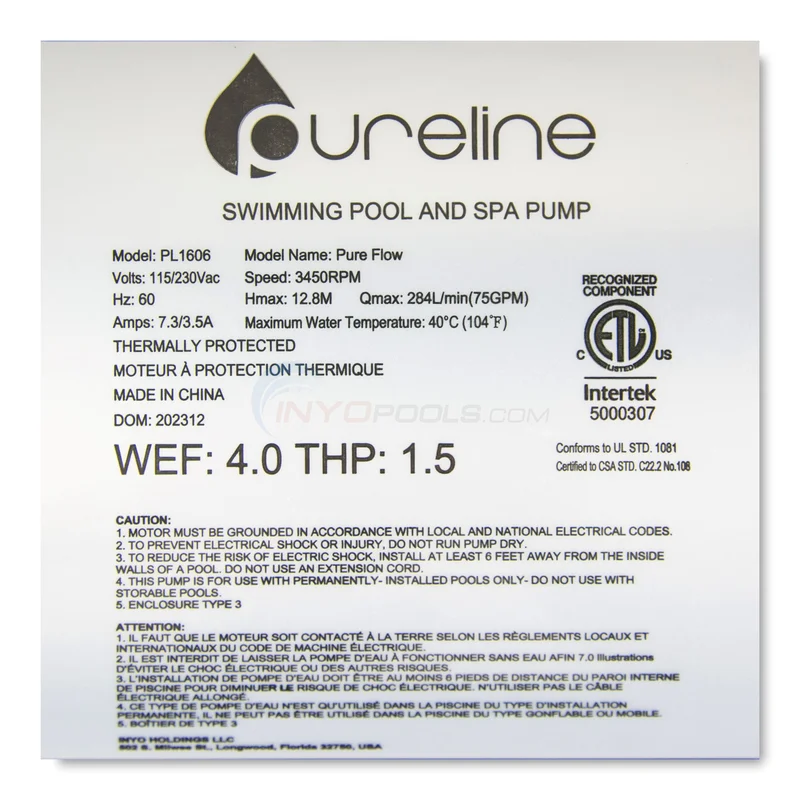
Horsepower (Nominal/Total): 1.0 HP / 1.0 THP
-
Service Factor: 1.0
-
Hydraulic Horsepower (HHP): 0.272
-
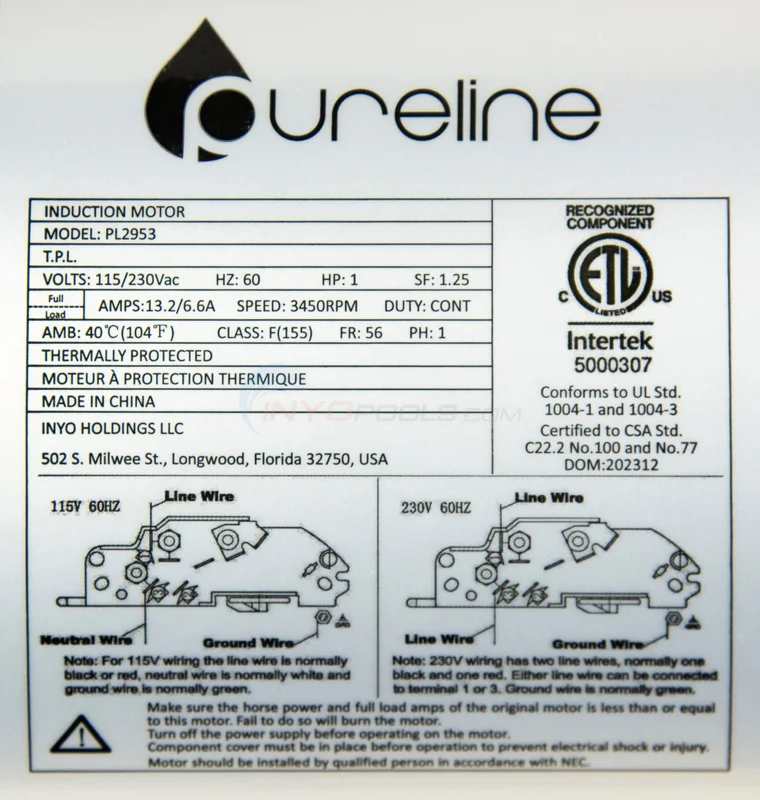
Voltage: 115/230V
-
Amps: 7.3 / 3.5
-
Speed: 3,450 RPM
-
Weighted Energy Factor (WEF): 4.00
-
Suction Lift: Up to 2.62 ft above water level
Applications
-
In-ground pools
-
Above-ground pools
Features
-
Quiet, energy-efficient performance
-
Transparent lid for easy strainer basket inspection
-
Durable, corrosion-proof reinforced thermoplastic construction
-
Easy-to-remove strainer cover for hassle-free maintenance
-
Built-in drain plug for winterization
-
Mechanical seal made of carborundum graphite
-
304-grade stainless steel motor shaft for corrosion resistance
Recommended Pool Fit
The Pure Flow Pump is a great fit if:
-
Your pump sits less than 3 feet above the water level
-
The suction line is under 50 feet
-
Your pool size is up to 18′ x 36′
Not Recommended For
-
Pools with pump location over 3 feet above water level
-
Suction runs over 50 feet
-
Pools larger than 18′ x 36′
-
Pools with solar heating, spa jets, or water features
Click here for the Above Ground Pool Version
Click here for Compatible Check Valves
DimensionsPump Curve
Installation Suggestions:
When possible, we suggest installing acheck valveon the suction side of the pump. The installation of acheck valvewill help re-priming your pump as it will keep water in your pump basket and make for easier start-up.
Pump Plumbing
There are many different ways a pool pump can be plumbed due to space requirements, existing plumbing, water features, etc… Due to these scenarios, we have listed some general best practices to adhere to when plumbing a pool pump.
Pool Plumbing Best Practices
- It is best to use larger plumbing on the suction side of the pump, as this will allow the pump to prime easier and put less stress on the pump resulting in longer pump life.
- For example, use 2” plumbing on the suction side of the pump and then use a 2” x 1.5” reducer bushing to reduce down to the 1.5” pump suction port. If you can only install larger plumbing on the 12” of pipe going into the pump, then this is fine, as you will still see benefits.
- Use a minimum of 12” of straight pipe going into the suction port of the pump.
- Avoid the use of 90-degree elbows within 12” of the suction port or discharge port of the pump.
- The fewer 90-degree elbows, the better.
- The use of two 45-degree fittings is better than one 90-degree elbow.
- If you are having problems with your pump keeping prime after the pump shuts off, then the use of acheck valveon the suction side of the pump will help with keeping the pump primed. Make sure the check valve is not too close to the suction port of the pump. See check valveplacement recommendations listed below.
Check Valve Placement
1.5” Plumbing – Check valvenot to be placed within 7.5” of pump suction port
2” Plumbing – Check valvenot to be placed within 10” of pump suction port
2.5” Plumbing – Check valvenot to be placed within 12.5” pump of the suction port
Piping
- Larger piping sizes improve pool plumbing.
- Piping on the suction side of the pump should be the same or larger than the return port.
- Plumbing on the suction side of the pump should be as short as possible.
- For most installations, it is recommended you install a valve on both the pump suction and return lines. This allows you to isolate the pump during routine maintenance. However, the valve,elbow, or tee installed in the suction line should be no closer to the front of the pump than 5 times the suction line diameter.
Example: A 2.5” pipe requires a 12.5” straight run in front of the suction inlet of the pump. This will help the pump prime faster and last longer.
Note: Do NOT install 90-degree elbows directly into the pump inlet or outlet.
Disclaimer:
All manufacturers’ names, brand names, trademarks, images, symbols, descriptions, and part numbers are used herein for reference purposes only.
Product Specifications
HP:
Reviews
There are no reviews yet.